Coaching Diaries - Week 1
Why Your Face Is Talking Even When You're Not
'Soft face.'
'What on earth is a soft face?'
'It's not a resting face, it's not a smiling face, it's a soft face.'
This was a conversation I had recently with a client during one of our coaching sessions. She looked at me like I'd made the term up on the spot. I hadn't, I promise; it's a real thing, and it might be one of the most useful things you can learn if you want to come across as composed in high-stakes situations.
This client works in a field where she's regularly in the room with people who are, by her own description, difficult. One colleague in particular is apparently a nightmare to deal with. But here's the thing. That colleague is also, by my client's own admission, an exceptional public speaker. She commands a room. Why? Because she lets her points land. She doesn't rush to fill silence. She doesn't react to every single thing said to her. She sits in it.
That's executive presence in a nutshell. It's not about being the loudest voice or the fastest talker. It's about restraint.
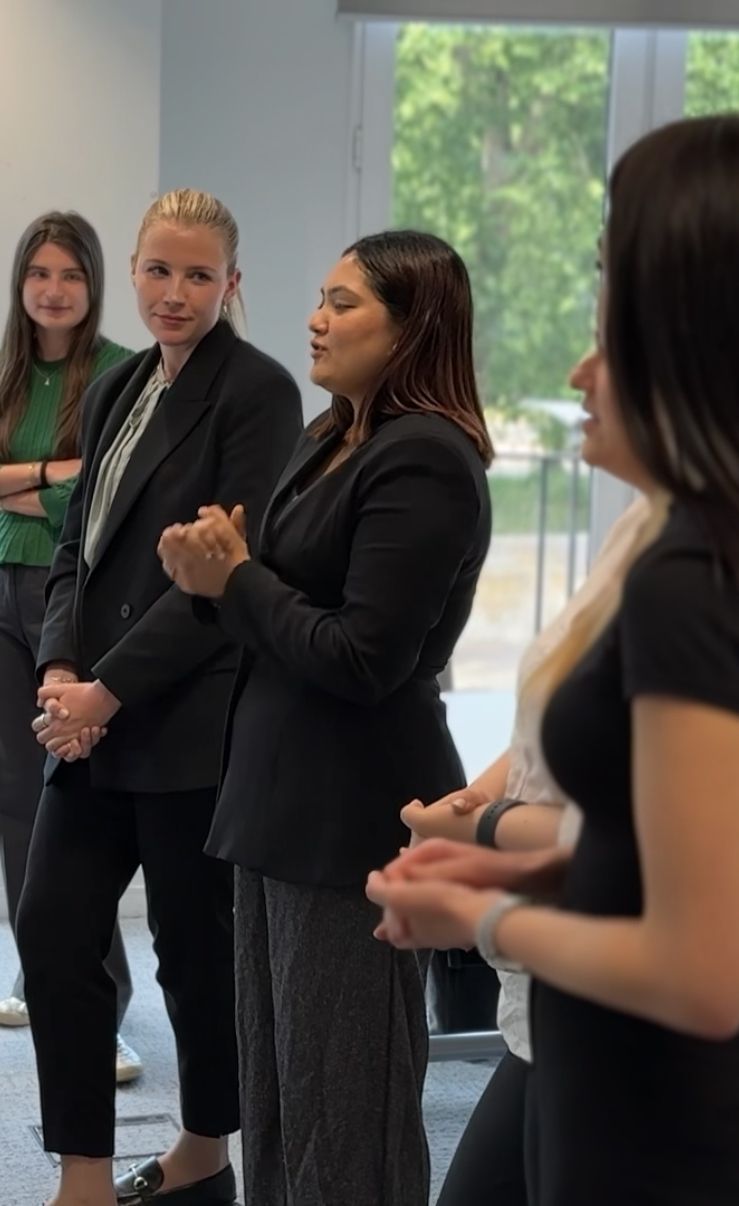
We spent a good chunk of our session on this. Like a lot of my clients, she has a habit of reacting quickly, nodding a lot, widening her eyes, doing all the things that signal engagement but can tip over into looking a bit desperate to be liked. So we worked on the soft face. Slight nod. Warm eyes. Nothing frantic. It sounds like a small adjustment, but it changes how a whole room reads you.
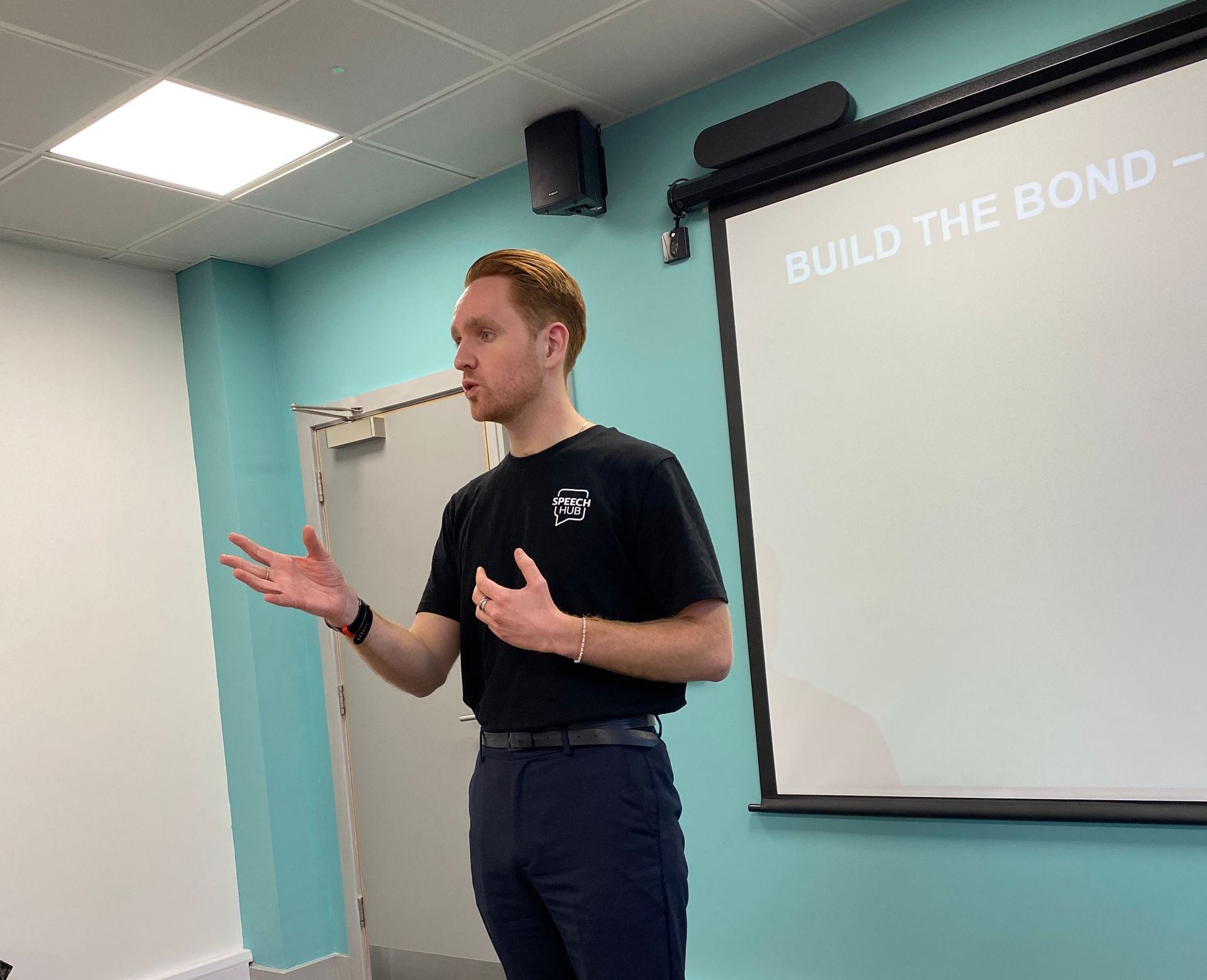
Hands matter too. Flapping gestures, the kind that spread out wide and fast, tend to read as anxious. Centralised gestures, kept closer to the body, read as controlled. I always tell clients this isn't about suppressing yourself, it's about choosing what you project. There's a difference.
The Beer Glass and the Paint Brushes
I like to test communication skills with daft exercises, and I make no apology for that.
One I did with this client involved me describing a pint glass with a man standing in a bucket inside it. Genuinely, that was the image. The point wasn't the picture, the point was pacing. Could she follow the description without me overwhelming her with detail all at once?
Could I break it down into digestible chunks and let her process each part before moving to the next?
Then we flipped it. She described ten paint brushes of varying sizes against a specific background, and I had to draw what she told me. This one went well. She compartmentalised the information brilliantly, working through it piece by piece rather than dumping the whole picture on me in one breath. It's a small exercise, but it exposes a big truth about communication. Most of us try to say too much too quickly, and we lose people in the process.
On AI, and What It Can't Replace
This client raised something in our session that I hear more and more from clients: worry about what AI means for her industry. It's a fair concern, and I'm not going to pretend it isn't real.
But here's what I said to her. Communication is one of the few things that genuinely can't be automated in the way people fear. You can generate a script, you can generate a summary, you can generate a perfectly worded email. What you can't generate is presence. You can't generate the ability to read a room or hold a pause the way that difficult but brilliant colleague of hers does. That's a human skill, built through practice and, frankly, through being a bit uncomfortable while you learn it.
Mastering communication isn't a nice to have anymore. It's a genuine differentiator.
Progress Is Slower Than It Feels
This client and I have been working together for eight to ten weeks now, and she said something I hear a lot: that progress feels slow.
I always push back on that. When you're in it, week to week, of course it feels slow. You're comparing yourself to yesterday, not to where you started. But when I go back and watch her early recordings against where she is now, the difference is obvious. It's a steady incline, not a straight line, and that's exactly how skill development works.
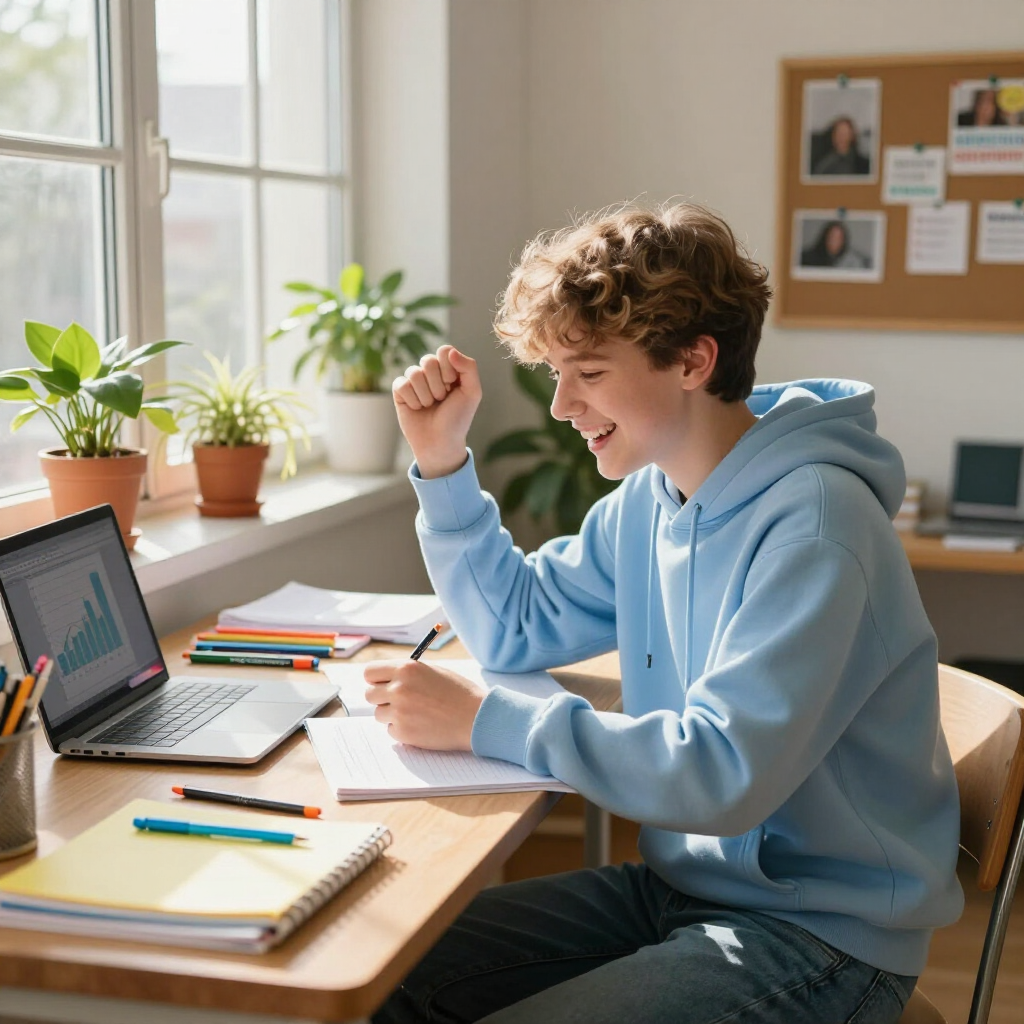
I had a similar realisation with a twelve year old client of mine recently, who has ADHD. He looked bored throughout our whole session. Genuinely, I thought I'd lost him. Turns out he was absorbing every word. It reminded me that engagement doesn't always look like engagement. Progress doesn't always look like progress either. Sometimes you just have to trust the process and keep showing up.
So if you're working on this stuff yourself, whether it's your face, your hands, your pacing, or just your general presence in a room, be patient with yourself. Record your sessions if you can. Watch them back with some distance. You'll be more objective about your own growth than you think, and you'll probably surprise yourself.
Now, if you'll excuse me, I have a pint glass with a man in a bucket to go and draw.